Saturnia Hot Springs: Visiting Tuscany’s Natural Thermal Pools
Saturnia is one of southern Tuscany’s most distinctive destinations, best known for its natural hot springs and unspoilt rural setting. If you are looking for a calm, open air thermal experience rather than a busy spa complex, Saturnia offers something rare in Tuscany.
Less than 30 minutes’ drive from Podere Sant’Angelo, the village and the nearby Cascate del Mulino fit naturally into a slower style of travel, where days are shaped around landscapes, simple pleasures and time outdoors rather than fixed schedules.
Is Saturnia the right fit for your trip?
Saturnia works best when it is approached as a natural landscape experience, not as a spa attraction to be consumed quickly. The springs are informal, open air and shared, with no fixed structure beyond the rhythm visitors create themselves.
Travellers tend to enjoy Saturnia most when they:
-
plan their visit around quieter times of day rather than fixed schedules
-
are comfortable with a simple, outdoor setting rather than facilities and services
-
see the springs as part of a wider day that may also include a village walk or a relaxed lunch nearby
-
value atmosphere and setting over added comforts
For couples and off-season travellers in particular, Saturnia often feels at its best early in the morning or towards evening, when the pace slows and the landscape becomes more noticeable than the crowd.
If you are expecting a curated spa experience with changing rooms, loungers and clear boundaries, the Cascate del Mulino may feel too unstructured. If you enjoy places that feel natural, local and slightly imperfect, Saturnia tends to leave a lasting impression.
What Makes the Saturnia Hot Springs Special
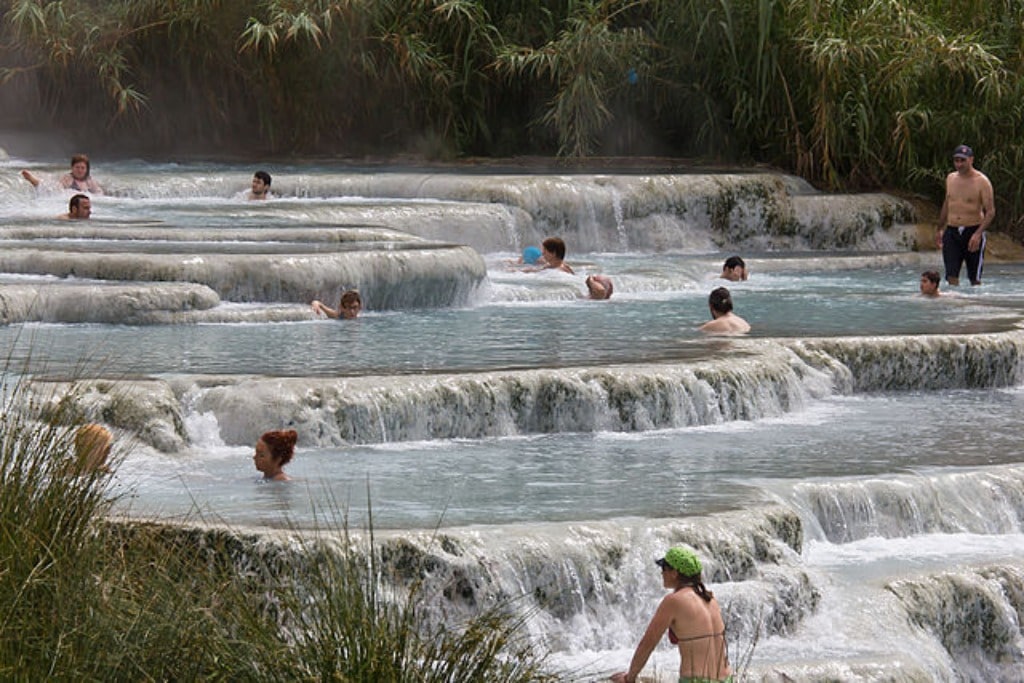
The hot springs of Saturnia are not a modern spa complex but a natural phenomenon shaped over thousands of years. Warm, mineral rich water emerges from underground and flows through a series of white limestone pools, forming the famous Cascate del Mulino.
The water temperature remains constant at around 37.5°C year round, making the springs suitable in every season. These waters were already used by the Etruscans and Romans, and bathing here has been part of local life for centuries.
One of the main attractions is that the Cascate del Mulino are open air and free to access, day and night. There are no entrance gates or time restrictions, which makes the experience feel informal and unforced.
For those who prefer a more structured environment, the Terme di Saturnia spa complex nearby offers thermal pools, treatments and restaurant facilities. This is a paid experience and very different in atmosphere from the natural cascades.
When to Visit and What to Expect
Saturnia is popular, particularly between May and September and at weekends. At busy times the pools can feel crowded, especially from late morning through to mid afternoon.
For a calmer visit:
-
arrive early in the morning
-
or visit in the late afternoon and early evening
-
consider spring, autumn or winter for a quieter experience
Outside peak season, the setting feels more spacious and relaxed, with softer light and cooler temperatures adding to the atmosphere.
Practical Tips for Visiting Saturnia's Hot Springs
- Arrive early or later in the day to avoid crowds and enjoy a more relaxed atmosphere.
-
Most visitors arrive already changed into swimwear. It is common to leave clothes, towels and bags nearby and simply keep an eye on your belongings while enjoying the water.
-
Wear suitable footwear, as the paths and limestone around the pools can be uneven and slippery.
-
Expect a mild sulphur smell, which is natural and part of the thermal experience.
-
Paid parking is available around a five minute walk from the Cascate del Mulino, with clear access paths to the pools.
There are basic facilities close to the springs, including a bar, toilets and showers. Many visitors still choose to bring water, a towel and a small bag to keep things simple.
If you prefer to visit at quieter times and return to a peaceful base afterwards, staying nearby but away from the crowds makes the day far more enjoyable. Podere Sant’Angelo is just under 30 minutes away and offers a calm place to unwind after a visit to the springs.
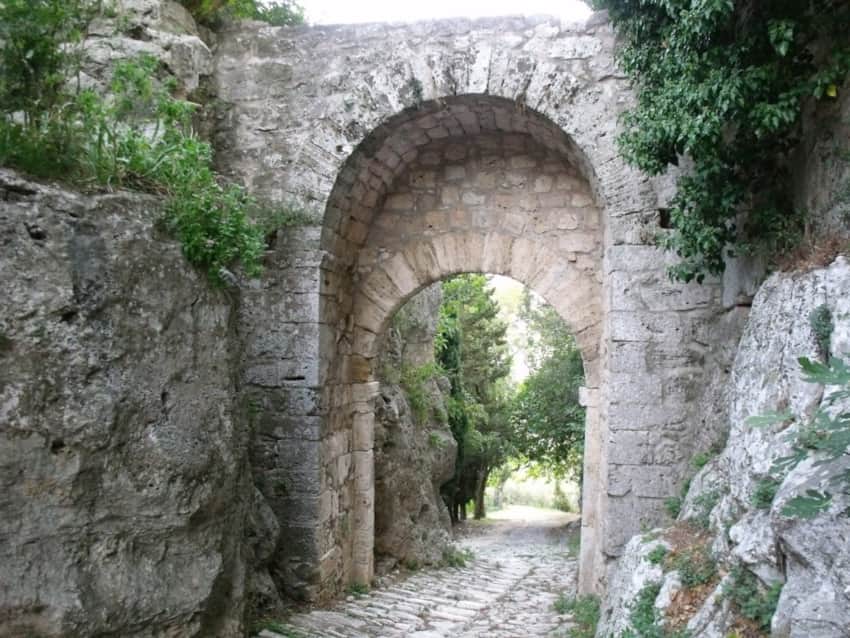
Exploring Saturnia Village
Beyond the waterfalls, Saturnia itself is a small historic village with a relaxed, local feel and a strong visible connection to its Roman past. A short walk through the centre reveals stone buildings, open views across the surrounding countryside and several well preserved archaeological traces.
Along the edge of the village you can still see remains of the Via Clotilda, part of the ancient Roman road network that once connected Saturnia with other important settlements in the region. The historic Porta Romana, the former Roman gateway into the town, marks the entrance and gives a clear sense of Saturnia’s strategic importance in antiquity.
In the main square, various Roman remains are displayed in situ, allowing visitors to see fragments of everyday Roman life without needing to visit a museum. These details are easy to overlook on a quick stop, but they reward a slower visit and add depth to the experience.
There are a few cafés and trattorias nearby serving traditional Maremma dishes, making the village a natural place to pause for lunch or an early evening meal. Nearby villages such as Montemerano and the Etruscan villages, Pitigliano, Sorano and Sovana, can easily be combined with Saturnia for a fuller and well balanced day out.
Practical Location Information
- Location: southern Tuscany, in the province of Grosseto
-
Access: best reached by car
-
Time from Podere Sant’Angelo: approximately 25 to 30 minutes. The drive passes through open countryside, olive groves and rolling hills typical of this part of Tuscany.
Saturnia hot springs FAQs
Are Saturnia's hot springs free?
Yes, the Cascate del Mulino natural hot springs near Saturnia are free to access and open 24 hours a day.
What is the water temperature at Saturnia's hot springs?
The water at Saturnia’s natural hot springs stays at around 37.5°C throughout the year.
Is there parking at Cascate del Mulino?
Yes, there is paid parking along the main road about a five-minute walk from the Cascate del Mulino.
Why Stay Nearby
Many travellers choose to visit Saturnia as part of a wider southern Tuscany stay rather than as a one off stop. Having a quiet base nearby allows you to:
-
visit the springs outside peak hours
-
combine bathing with walking or village visits
-
return to peace and silence at the end of the day
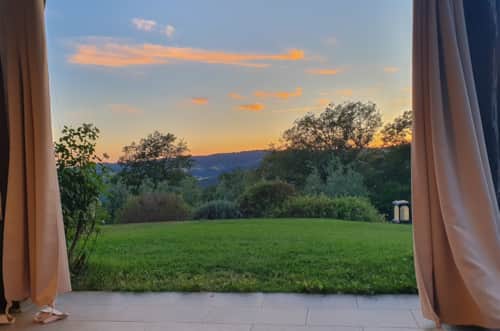
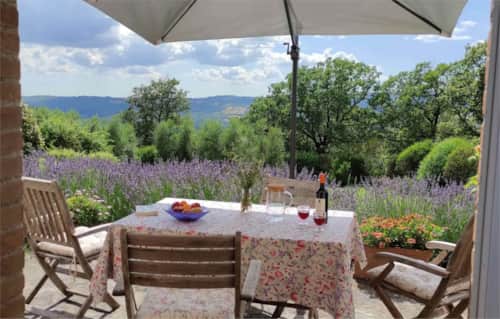
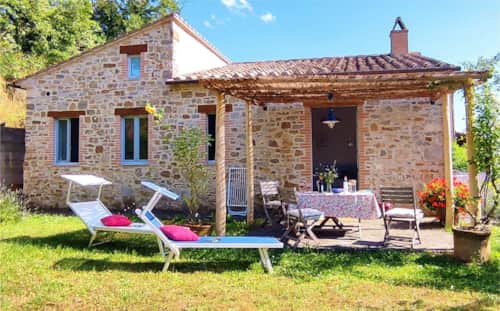
Podere Sant’Angelo offers three one bedroom holiday cottages set in the hills of the Maremma, well placed for exploring Saturnia, Pitigliano, Sovana and the wider region at an unhurried pace.
Planning Your Visit
Saturnia fits best into a slower travel rhythm, where you allow time to enjoy both the springs and the surrounding landscape. If you are staying in the area and would like suggestions on timing your visit or combining it with nearby villages or walks, this is easy to plan once you arrive.
Why book directly with Podere Sant’Angelo?
💰 Best Price Guarantee
Save money — no commissions or hidden fees. You always get the lowest rate here.
💬 Direct Contact
Talk directly with your host — for local tips, quick answers, and a personal touch.
🍷 Local Insights
Get insider recommendations for walks, hilltop villages, wineries, and restaurants nearby.
🕊️ Secure & Simple Booking
Safe payments, transparent conditions, and friendly support — from the first click to check-out.
Also available in:
Deutsch | Nederlands | Français | Italiano